Where we started
Not with a design — with a walk. We asked the owners to show us how they actually move around the property during a day. Some routes weren't paved at all; people cut across the lawn 'because it's shorter'. Those shortcuts became the future paths.
Paving for load vs. paving for feet
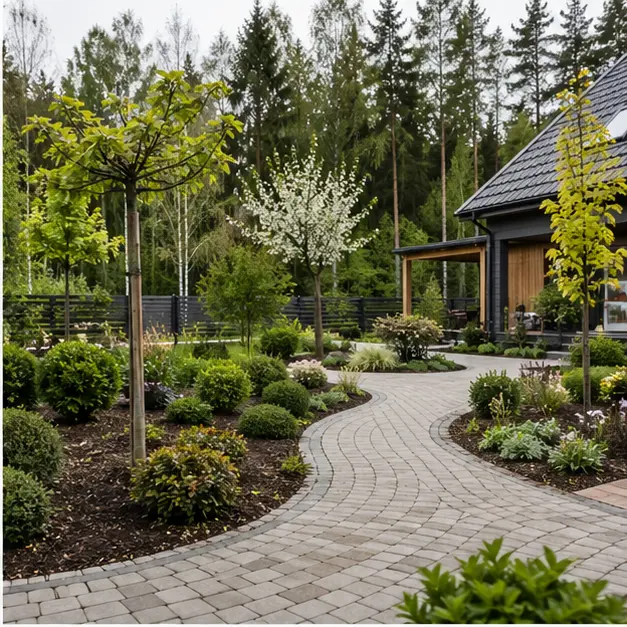
Under the parking approach and the main route to the house we laid 100×100 mm granite paver on an approximately 25 cm build-up: geotextile, crushed stone and a levelling layer. That gives reserve for car access and daily foot traffic. The path to the sauna and gazebo used finer clinker paver with grass joints: it breathes, heats up less under bare feet and sits softer in the garden.
Planting between paths
We avoided the 'allotment between the pavers' look. Free islands of ornamental grasses (miscanthus, fescue), flowering perennials (echinacea, catmint, sage) and three ornamental trees — Amur maple and two bird cherries. We picked species so every month from May to September has its colour moment.
Why the sub-base matters
Most 'paving problems after two years' start with the sub-base, not the paver itself. We ran the full stack: geotextile, 20–40 mm crushed stone, cement-sand mix. It costs more up front, but after three seasons the path hasn't settled anywhere.
What's next
The owners are on light seasonal care with us: perennial feeding, ornamental tree pruning, joint refresh once a year. Same crew, same single contact.