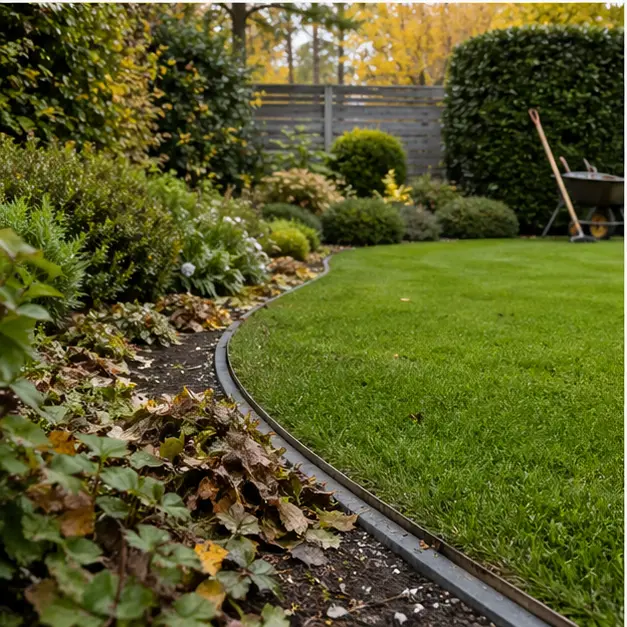
What annual care covers
Seasonal care in Estonia isn't 'show up every two weeks to mow the lawn'. It's a set of climate-bound operations, each with its right moment.
Spring (March — May)
Lawn dethatching, aeration and the first nitrogen feed. Cleanup of winter leaves and branches. Sanitary pruning of ornamental shrubs and trees. Drainage check after thaw. Uncovering roses and perennials that overwintered with protection.
Summer (June — August)
Lawn mowing every 7–10 days, formative trimming of hedges 1–2 times per season. Weeding of flower beds, mulching. Slow-release fertilising. Watering during droughts (irrigation systems are checked and adjusted).
Autumn (September — November)
Final mow, autumn feed with potassium for winter hardiness. Leaf removal — usually 2–3 passes, depending on wind and tree species. Pruning of perennials, covering roses and burn-sensitive conifers.
Winter (December — February)
Snow clearing on paths and parking after snowfall on the agreed schedule. Anti-ice treatment — we use fine granite chips or a low-concentration salt mix to reduce the risk of damaging the lawn edges. On request, shaking heavy snow off thuja and globe-shaped shrubs.
Why a fixed monthly fee
'Pay per work done' suits the contractor, not the client: every invoice is a surprise. We estimate the annual workload up front and split it into 12 equal payments. In months with less work, we can cover small one-off tasks within the contract (moving a shrub, planting new perennials into an existing bed).
What's not included
Capital works — new specimen planting, lawn replacement, hard landscaping. Those are scoped and quoted separately. But even then, the owners don't have to look for a new contractor — it's still us.